

Hey there! As a supplier of Tungsten for Medical Imaging, I've been super into how tungsten interacts with contrast agents in medical imaging. It's a wild and exciting field, and I'm stoked to share some insights with you.
First off, let's talk about what contrast agents are. In medical imaging, contrast agents are substances used to enhance the visibility of internal structures in the body. They work by changing the way X - rays, magnetic fields, or other imaging modalities interact with tissues. There are different types of contrast agents, like iodine - based ones for X - ray and CT scans, and gadolinium - based ones for MRI.
Now, tungsten is a pretty amazing metal. It has a high atomic number (74), which means it's really good at absorbing X - rays. This property makes it a top - notch material for various medical imaging applications. When it comes to its interaction with contrast agents, there are a few different aspects to consider.
1. Complementary Absorption Properties
In X - ray and CT imaging, the goal is to get clear images of the body's internal organs and tissues. Contrast agents are used to highlight specific areas, and tungsten can play a supporting role. Tungsten's high X - ray absorption ability can help in creating a more defined contrast between different structures. For example, in some cases, tungsten can be used in the collimators or shielding components of the imaging equipment. The collimators are used to shape the X - ray beam, and by using tungsten, we can reduce the scatter of X - rays, which in turn improves the image quality. This works hand - in - hand with the contrast agents that are injected into the patient. The contrast agents make certain tissues more visible, and the tungsten in the equipment helps to ensure that the X - rays are focused properly, resulting in a sharper image.
2. Potential for Dual - Energy Imaging
Dual - energy CT is a cool technique that uses two different X - ray energy levels to obtain more detailed information about the tissues. Tungsten can be used in the design of X - ray tubes for dual - energy CT. Different contrast agents have different absorption characteristics at different energy levels. For instance, iodine - based contrast agents absorb X - rays more strongly at lower energies. Tungsten's ability to generate X - rays at a wide range of energies can be optimized to work with these contrast agents. By carefully selecting the energy levels of the X - rays produced by the tungsten - based X - ray tube, we can enhance the differentiation between tissues with and without the contrast agent. This allows for better identification of diseases, such as tumors, which may have a different uptake of the contrast agent compared to normal tissues.
3. Tungsten in Nuclear Medicine
When it comes to Tungsten for Nuclear Medicine, things get even more interesting. Nuclear medicine uses radioactive tracers (a type of contrast agent) to diagnose and treat diseases. Tungsten can be used in shielding to protect the patient and the medical staff from the radiation emitted by these tracers. Tungsten's high density and excellent radiation - absorbing properties make it an ideal material for this purpose. For example, in the storage and handling of radioactive contrast agents, tungsten containers can be used to safely store the tracers before they are injected into the patient. This way, the radiation is contained, and the risk of exposure is minimized.
4. Tungsten in Nuclear Energy - Related Medical Imaging
There's also a connection between Tungsten for Nuclear Energy and medical imaging. In some cases, nuclear energy is used to produce the radioactive isotopes that are used as contrast agents in nuclear medicine. Tungsten can be used in the components of the nuclear reactors or particle accelerators used for isotope production. It can withstand the high - energy environment and help in the efficient production of these isotopes. Once the isotopes are produced, they are used as contrast agents in medical imaging, and the whole process is a complex but well - coordinated system.
5. Challenges and Future Directions
Of course, there are some challenges when it comes to the interaction between tungsten and contrast agents. One of the main challenges is the need for more research on the long - term effects of using tungsten in medical imaging equipment. Although tungsten is generally considered safe, we need to make sure that there are no unforeseen health risks associated with its use. Another challenge is the cost. Tungsten is a relatively expensive metal, and finding ways to reduce the cost of using it in medical applications without sacrificing performance is a key area of research.
Looking to the future, there are some exciting possibilities. For example, we might see more advanced materials that combine the properties of tungsten and contrast agents in a single substance. This could lead to even more precise and efficient medical imaging techniques. There's also potential for the development of new imaging modalities that take full advantage of tungsten's unique properties and the capabilities of contrast agents.
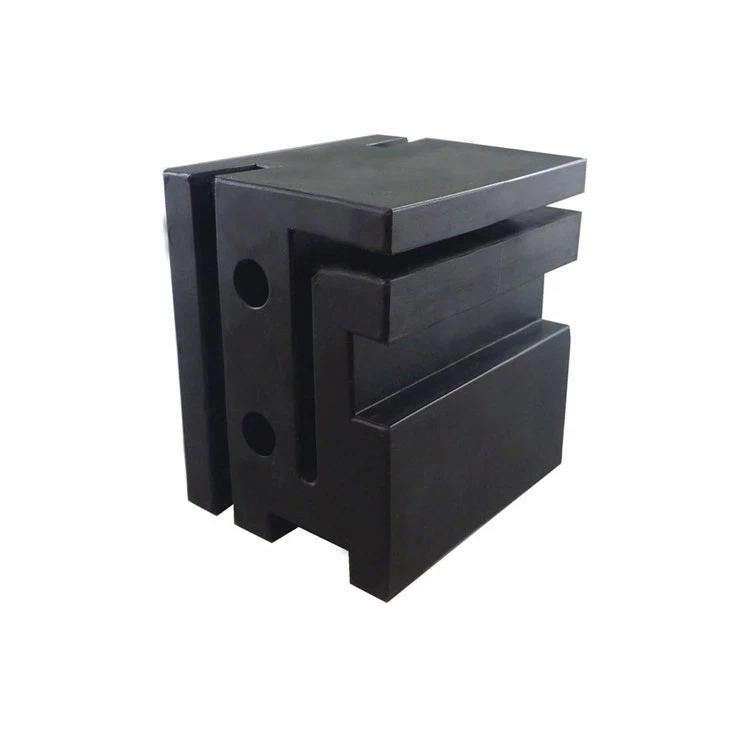

Why Choose Our Tungsten Products?
As a supplier of tungsten for medical imaging, we take pride in offering high - quality products. Our tungsten is carefully sourced and processed to meet the strict requirements of the medical industry. We have a team of experts who are constantly researching and developing new ways to improve the performance of our tungsten products in medical imaging applications. Whether it's for collimators, shielding, or X - ray tube components, our tungsten products are designed to work seamlessly with contrast agents to provide the best possible image quality.
If you're in the medical imaging field and are looking for reliable tungsten products, we'd love to hear from you. We can provide you with samples and technical support to help you make the right choice for your specific needs. Whether you're a manufacturer of medical imaging equipment or a research institution working on new imaging techniques, we're here to assist you. Just reach out, and we can start a conversation about how our tungsten products can enhance your medical imaging projects.
Conclusion
In conclusion, the interaction between tungsten and contrast agents in medical imaging is a fascinating area of study. Tungsten's unique properties, such as its high X - ray absorption and radiation - shielding capabilities, make it an invaluable material in this field. By working in tandem with contrast agents, tungsten can help to improve the quality of medical images, leading to better diagnosis and treatment of diseases. As technology continues to advance, we can expect even more exciting developments in this area. So, if you're interested in learning more or are considering using tungsten in your medical imaging applications, don't hesitate to get in touch. Let's explore the possibilities together!
References
- Bushberg, J. T., Seibert, J. A., Leidholdt, E. M., & Boone, J. M. (2012). The essential physics of medical imaging. Lippincott Williams & Wilkins.
- Powsner, R. A., & Powsner, E. R. (2004). Medical imaging physics. Springer.
- Knoll, G. F. (2010). Radiation detection and measurement. John Wiley & Sons.
