

How to prevent oxidation of tungsten alloy lead free?
As a supplier of Tungsten Alloy Lead Free products, I understand the significance of preventing oxidation in maintaining the quality and performance of these materials. Oxidation can lead to surface degradation, reduced mechanical properties, and diminished functionality of tungsten alloy lead free components. In this blog post, I will share some effective strategies and methods to prevent the oxidation of tungsten alloy lead free, which can be of great help to our customers in various industries.
Understanding the Oxidation Mechanism of Tungsten Alloy Lead Free
Before delving into prevention methods, it's essential to understand how oxidation occurs in tungsten alloy lead free. Tungsten alloys typically consist of tungsten and other alloying elements, which offer excellent physical and chemical properties, such as high density, high melting point, and good corrosion resistance. However, tungsten can react with oxygen in the air under certain conditions, forming tungsten oxides. The most common tungsten oxide is tungsten trioxide (WO₃), which appears as a yellow - brown powder and can gradually spread on the surface of the alloy, affecting its appearance and performance.
The oxidation process of tungsten alloy lead free is mainly influenced by factors such as temperature, oxygen concentration, time, and the presence of impurities. Higher temperatures accelerate oxidation rates, as the activation energy required for the reaction between tungsten and oxygen is more easily reached. Similarly, a higher oxygen concentration in the environment provides more reactants for the oxidation reaction. Prolonged exposure to oxidizing conditions also increases the degree of oxidation. Additionally, impurities in the alloy can act as catalysts or initiate sites for oxidation, promoting the reaction.
Preventive Measures for Oxidation
Surface Coating
One of the most effective ways to prevent oxidation of tungsten alloy lead free is by applying a surface coating. Coatings can act as a physical barrier between the alloy surface and the oxygen - containing environment. There are several types of coatings that can be used:
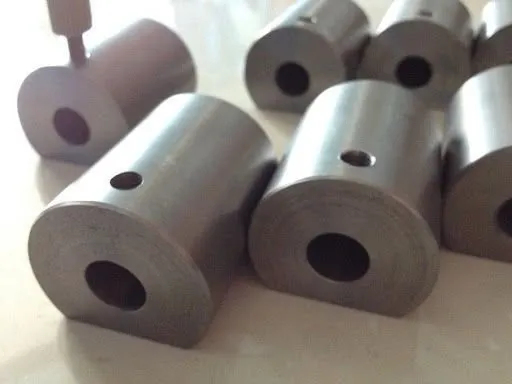

- Metallic Coatings: Metals such as nickel, chromium, and titanium can be coated onto the surface of tungsten alloy lead free through processes like electroplating or physical vapor deposition (PVD). Nickel coatings, for example, are inert and can provide good protection against oxidation. They also enhance the corrosion resistance of the alloy and improve its appearance.
- Ceramic Coatings: Ceramic materials like silicon carbide (SiC), aluminum oxide (Al₂O₃), and zirconium oxide (ZrO₂) have high chemical stability and can serve as excellent protective coatings. These ceramic coatings can be applied using techniques such as thermal spraying or sol - gel processes. They can withstand high temperatures and provide long - term protection against oxidation.
Control of Storage and Working Environments
The environment where tungsten alloy lead free is stored and used plays a crucial role in preventing oxidation.
- Temperature and Humidity Control: Storing the alloy in a cool, dry place can significantly slow down the oxidation process. High temperatures accelerate the reaction between tungsten and oxygen, and humidity can promote the formation of oxides by providing a medium for ionic transport. Ideal storage conditions usually involve a temperature below 25°C and a relative humidity below 50%. If the alloy is used in a manufacturing process, temperature and humidity in the working area should also be carefully regulated.
- Reduced Oxygen Concentration: Creating an oxygen - depleted environment can effectively prevent oxidation. This can be achieved by storing the alloy in a sealed container filled with an inert gas such as nitrogen or argon. Purge systems can also be installed in industrial processing equipment to maintain a low - oxygen atmosphere during operations.
Alloy Composition Optimization
Optimizing the alloy composition can enhance the oxidation resistance of tungsten alloy lead free. By adding certain alloying elements, the formation of stable oxide layers on the surface can be promoted, which can act as a self - protective barrier.
- Rhenium Addition: Rhenium (Re) is a common alloying element that can improve the oxidation resistance of tungsten. It can form a more adherent and stable oxide layer on the surface, preventing further oxidation. The addition of rhenium in appropriate amounts can also enhance the ductility and high - temperature strength of the alloy.
- Other Alloying Elements: Elements such as molybdenum (Mo), titanium (Ti), and tantalum (Ta) can also be added to adjust the alloy's crystal structure and improve its oxidation resistance. These elements interact with tungsten and oxygen in a way that inhibits the growth of oxides.
Application in Radiation Shielding
Our Tungsten Alloy Radiation Shielding Lead Free products are widely used in medical, nuclear, and industrial applications for radiation protection. Oxidation prevention is of utmost importance in these applications, as any degradation of the alloy's properties can lead to reduced shielding effectiveness.
The Tungsten Alloy Radiation Shielding Lead Free products we offer are carefully treated to prevent oxidation. We use advanced surface coating techniques and strict quality control measures during the manufacturing process. By ensuring the long - term stability and performance of our radiation shielding products, we can provide reliable protection for our customers in various radiation - related scenarios.
Conclusion and Call to Action
Preventing the oxidation of tungsten alloy lead free is essential for maintaining its quality, performance, and functionality. By implementing strategies such as surface coating, environmental control, and alloy composition optimization, we can effectively reduce the risk of oxidation. As a leading supplier of Tungsten Alloy Lead Free products, we are committed to providing high - quality materials with excellent oxidation resistance.
If you are interested in our Tungsten Alloy Lead Free products for various applications, including radiation shielding, or have any questions about oxidation prevention, please feel free to contact us for further discussions. We look forward to collaborating with you and providing customized solutions to meet your specific needs.
References
- Kutz, M. (Ed.). (2017). Handbook of environmentally friendly machining. Elsevier.
- Zhang, Y., & Chen, Y. (2016). Oxidation behavior of tungsten - based alloys. Journal of Alloys and Compounds, 689, 624 - 630.
