

In the realm of modern medical imaging, Computed Tomography (CT) scanners stand as a cornerstone technology, providing detailed cross - sectional images of the human body. These scanners have revolutionized diagnostic medicine, enabling healthcare professionals to detect and monitor a wide range of conditions with high precision. Among the various components that make up a CT scanner, the patient table plays a crucial yet often overlooked role. Tungsten alloy, with its unique properties, has emerged as an essential material in the construction of CT scanner patient tables.
1. The Basics of CT Scanners and Patient Tables
CT scanners work by rotating an X - ray tube and detectors around the patient, capturing multiple X - ray images from different angles. These images are then processed by a computer to create detailed 3D reconstructions of the internal organs and tissues. The patient table is the platform on which the patient lies during the scanning process. It must be able to move smoothly and precisely in both the longitudinal and transverse directions to position the patient accurately within the scanner's gantry.
2. Properties of Tungsten Alloy
Tungsten alloy is a composite material that combines tungsten with other metals such as nickel, iron, or copper. This combination results in a material with several outstanding properties that are highly beneficial for use in CT scanner patient tables:
High Density
Tungsten alloy has an extremely high density, typically ranging from 16 - 18 g/cm³. This high density allows it to effectively absorb X - rays. In the context of a CT scanner patient table, this property is crucial for reducing scatter radiation. Scatter radiation occurs when X - rays interact with the patient's body and are deflected in different directions. If not properly managed, scatter radiation can degrade the quality of the CT images by creating noise and reducing contrast. By incorporating tungsten alloy into the patient table, the amount of scatter radiation reaching the detectors can be significantly reduced, resulting in clearer and more accurate images.
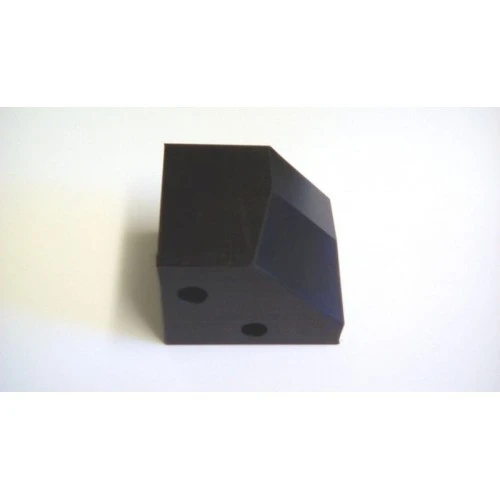

Excellent Mechanical Strength
Tungsten alloy possesses high mechanical strength and hardness. This means that it can withstand the weight of the patient and the stresses associated with the movement of the table without deforming or breaking. The patient table needs to be sturdy and reliable to ensure consistent and accurate positioning of the patient during the scanning process. The high mechanical strength of tungsten alloy ensures that the table maintains its structural integrity over time, even with frequent use.
Good Machinability
Despite its high density and strength, tungsten alloy can be machined into complex shapes with relative ease. This property allows manufacturers to design and produce patient tables with customized features and precise dimensions. For example, the table can be shaped to fit the specific requirements of different CT scanner models, and it can be equipped with features such as grooves or tracks for the attachment of additional accessories.
3. Role of Tungsten Alloy in Patient Tables
Radiation Shielding
As mentioned earlier, one of the primary roles of tungsten alloy in the patient table is radiation shielding. The high - density nature of tungsten alloy makes it an effective barrier against X - rays. By lining the patient table with tungsten alloy, the amount of radiation that passes through the table and reaches the scanner's components or the surrounding environment can be minimized. This not only protects the scanner's internal components from radiation damage but also reduces the radiation exposure of the medical staff and other patients in the vicinity.
Image Quality Improvement
By reducing scatter radiation, tungsten alloy in the patient table contributes to improved image quality. Scatter radiation can cause artifacts in the CT images, which can make it difficult for radiologists to accurately interpret the results. The use of tungsten alloy helps to eliminate these artifacts, resulting in images that are sharper, have better contrast, and provide more detailed information about the patient's internal structures. This is particularly important for the detection of small lesions or subtle abnormalities that may be missed in low - quality images.
Precision and Stability
The mechanical properties of tungsten alloy ensure the precision and stability of the patient table. During a CT scan, the table needs to move smoothly and accurately to position the patient at the correct location. The high strength and hardness of tungsten alloy prevent the table from warping or vibrating, which could otherwise lead to misalignment and inaccurate imaging. This precision is essential for obtaining consistent and reliable scan results, especially in cases where multiple scans are required for monitoring the progression of a disease or the effectiveness of a treatment.
4. Related Tungsten Alloy Products for CT Scanners
In addition to its use in patient tables, tungsten alloy is also widely used in other components of CT scanners. For example, Tungten Collimator and Detectors are often made from tungsten alloy. Collimators are used to shape the X - ray beam, ensuring that only the desired area of the patient's body is exposed to radiation. Tungsten alloy's high density and ability to absorb X - rays make it an ideal material for collimators. Detectors, on the other hand, are responsible for capturing the X - rays that pass through the patient. Tungsten alloy can be used to improve the efficiency and accuracy of the detectors by reducing scatter radiation and enhancing the signal - to - noise ratio.
Tungsten Polymer Radiation Shielding is another important application of tungsten alloy in CT scanners. This material combines the radiation - shielding properties of tungsten with the flexibility and ease of processing of polymers. It can be used to create custom - shaped shields for protecting sensitive areas of the patient's body, such as the thyroid or reproductive organs, during the scanning process.
Tungsten Alloy Eye Shield and Ear Shield are also available for use in CT scanners. These shields are designed to protect the patient's eyes and ears from unnecessary radiation exposure. Tungsten alloy's high density provides effective shielding while maintaining a relatively small and lightweight design, which is comfortable for the patient to wear during the scan.
5. Why Choose Our Tungsten Alloy for CT Scanners
As a leading supplier of Tungsten Alloy for CT Scanner, we are committed to providing high - quality products that meet the strict requirements of the medical industry. Our tungsten alloy products are manufactured using advanced production techniques and undergo rigorous quality control procedures to ensure their reliability and performance.
We offer a wide range of tungsten alloy products for CT scanners, including patient tables, collimators, detectors, radiation shields, and eye and ear shields. Our products are customizable to meet the specific needs of different CT scanner models and applications. Whether you are a CT scanner manufacturer looking for high - quality components or a healthcare provider in need of radiation - shielding solutions, we have the expertise and resources to provide you with the best products.
6. Contact Us for Purchase and Negotiation
If you are interested in our tungsten alloy products for CT scanners, we invite you to contact us for purchase and negotiation. Our team of experts is ready to assist you in selecting the right products for your specific requirements and providing you with detailed product information and pricing. We believe that our high - quality tungsten alloy products can enhance the performance and reliability of your CT scanners, ultimately improving the quality of patient care.
References
- Bushberg, J. T., Seibert, J. A., Leidholdt, E. M., & Boone, J. M. (2012). The essential physics of medical imaging. Lippincott Williams & Wilkins.
- Huda, W. (2010). Medical imaging physics. Lippincott Williams & Wilkins.
- Tsui, B. M. W. (2002). Fundamentals of medical imaging. Wiley - Interscience.
